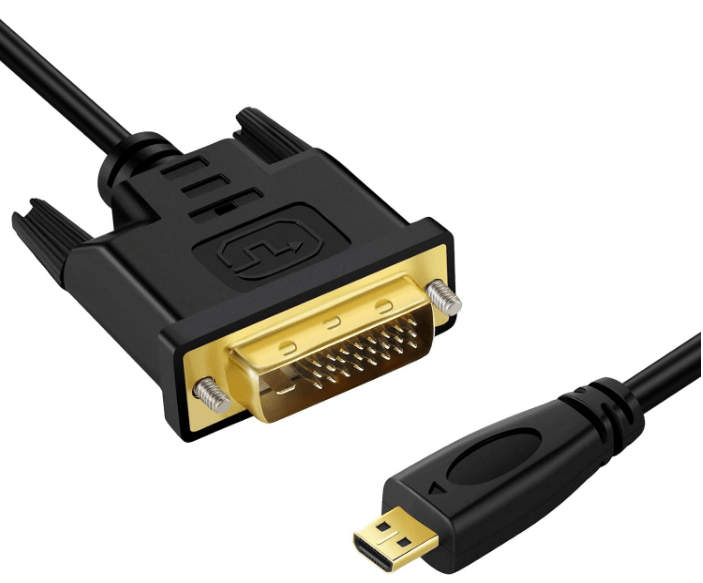
Micro-DVI is a compact digital video interface developed by Apple Inc., primarily designed to reduce the size of video connectors on small portable devices. It was introduced as a space-saving alternative to the larger standard DVI (Digital Visual Interface) and was used exclusively in a limited range of Apple products. Below is a detailed breakdown:
1. Key Features and Purpose
- Compact Design: As its name suggests, Micro-DVI is significantly smaller than standard DVI connectors, making it ideal for thin and lightweight devices where space is at a premium (e.g., ultraportable laptops).
- Digital Signal Transmission: Like standard DVI, Micro-DVI carries uncompressed digital video signals, supporting resolutions up to a certain limit (depending on the device and cable).
- No Audio Support: Similar to DVI, Micro-DVI is a video-only interface and does not transmit audio signals. Audio must be handled separately via other ports (e.g., 3.5mm headphone jacks).
2. Compatibility and Supported Resolutions
- Devices: Micro-DVI was used exclusively in a few Apple products, most notably:
- The 11.6-inch and 13.3-inch Apple MacBook (late 2008 to mid-2009 models).
- Some early Apple LED Cinema Displays (via adapters).
- Resolutions: It typically supported resolutions up to 1920×1200 pixels, which was sufficient for most monitors and displays of its era. Higher resolutions were not supported due to bandwidth limitations.
3. Adapters and Connectivity
Since Micro-DVI was a proprietary connector with limited use, Apple provided specific adapters to connect Micro-DVI devices to more common display interfaces:
- Micro-DVI to DVI Adapter: Allowed connection to standard DVI-equipped monitors or projectors.
- Micro-DVI to VGA Adapter: Enabled compatibility with analog VGA displays (though this converted the digital signal to analog, potentially reducing quality).
- Micro-DVI to HDMI Adapter: Less common, but some third-party adapters allowed connection to HDMI displays (video only, no audio).
4. Obsolescence
Micro-DVI was short-lived in Apple’s product lineup. It was phased out around 2010 and replaced by Mini DisplayPort (later Thunderbolt), which offered greater versatility:
- Mini DisplayPort supported higher resolutions, audio transmission, and daisy-chaining of multiple displays.
- It was also adopted by other manufacturers, making it more widely compatible than the proprietary Micro-DVI.
5. Comparison to Similar Interfaces
| Interface | Size | Audio Support | Common Use Cases |
|---|---|---|---|
| Micro-DVI | Very small | No | Apple MacBook (2008–2009) |
| Standard DVI | Larger | No | Desktop monitors, older TVs |
| Mini DisplayPort | Small | Yes | Modern laptops, monitors, Thunderbolt devices |
| HDMI | Medium | Yes | TVs, gaming consoles, streaming devices |
Summary
Micro-DVI was a niche, Apple-specific digital video interface designed for portability. While it served its purpose in a limited range of ultraportable laptops, its lack of audio support and proprietary nature led to its replacement by more versatile standards like Mini DisplayPort. Today, it is largely obsolete, though it remains a footnote in the history of video connectivity.





















Leave a comment