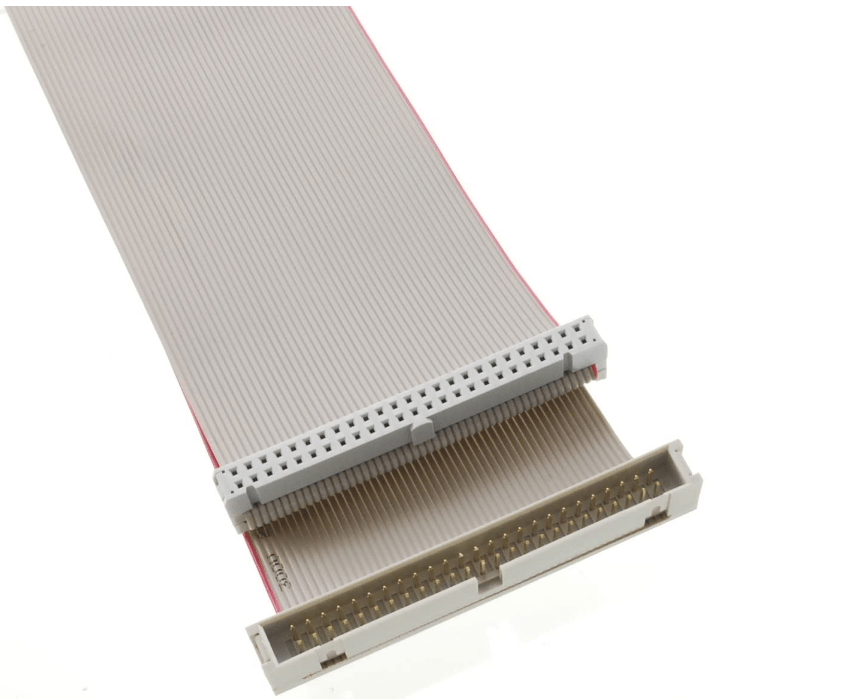
The 50-pin SCSI-2 refers to the second-generation standard of the Small Computer System Interface (SCSI) with a 50-pin configuration, commonly used in servers, mass storage devices, and other high-performance equipment. Here is a detailed introduction:
Interface Characteristics
- The 50-pin SCSI-2 interface features pins arranged in two rows, with 25 pins per row.
- It typically uses a soldered connection, and common connector types include the HD50 (High-Density 50-pin) connector, which offers good electrical performance and mechanical stability.
Transmission Performance
- The SCSI-2 standard was established in 1992, with FAST SCSI as its core specification, enabling data transfer speeds of up to 10 MB/s over the SCSI bus.
- WIDE SCSI, an enhanced specification under SCSI-2, supports 16-bit data transmission simultaneously, doubling the data transfer rate to 20 MB/s.
Device Connectivity Limits
- For FAST SCSI devices using 50-pin connectors, a maximum of 7 devices can be daisy-chained on a single bus.
- The maximum cable length is restricted to 3 meters to ensure signal integrity.
Application Fields
- Widely used in servers, disk arrays, and optical disc drives.
- Also applied to connect servo drives, motion controllers, and PCI-X cards.
- Commonly found in high-end workstations and scenarios requiring high-speed data transfer and large-capacity storage.
In summary, 50-pin SCSI-2 played a key role in early high-performance computing, bridging the gap between systems and peripherals with improved speed and versatility compared to its predecessor (SCSI-1). Though replaced by newer interfaces like SATA and USB in mainstream use, it remains relevant in legacy industrial and retro computing setups.





















Leave a comment