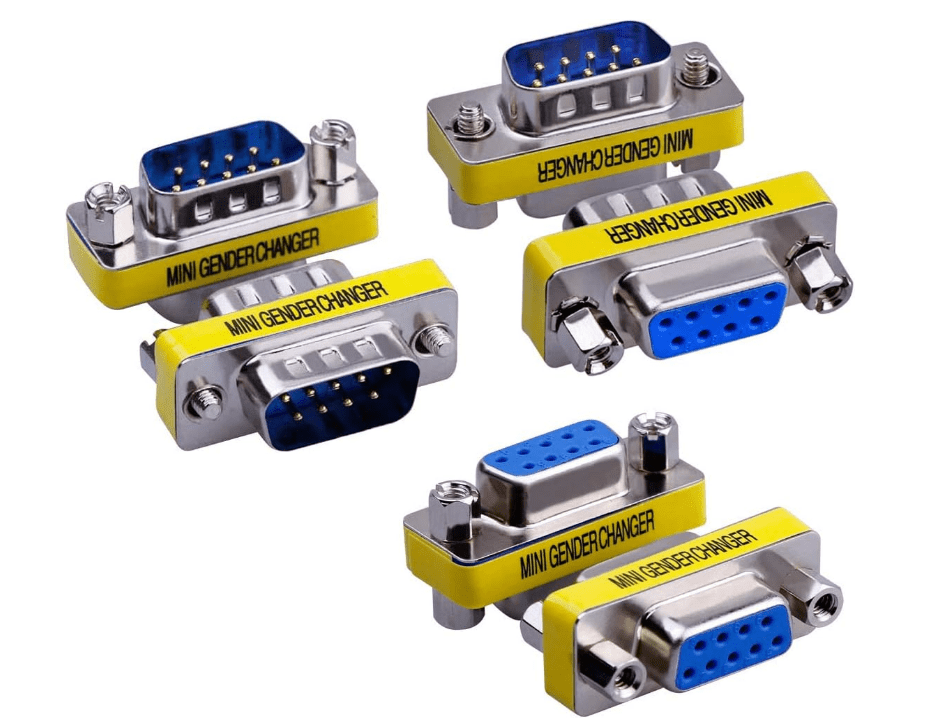
DB-9 Serial RS232 is a standard serial – communication interface, which is used to connect external devices to computers or host systems. It is based on the RS – 232 protocol and is widely used in the field of data transmission. The following is a detailed introduction:
Compatibility and Substitution: Although most modern computers no longer have built – in RS – 232 communication interfaces, they can be equipped with USB – to – RS – 232 converters to achieve communication with DB – 9 Serial RS232 devices.
Pin Definition: It usually uses a 9 – pin D – subminiature connector. For the male connector on the computer side (DTE), pin 1 is DCD (Data Carrier Detect), used to detect the carrier signal from the data circuit – terminating equipment (DCE); pin 2 is RXD (Received Data), used to receive data from DCE; pin 3 is TXD (Transmitted Data), used to send data to DCE; pin 4 is DTR (Data Terminal Ready), indicating that the data terminal is ready; pin 5 is GND (Ground), providing a common ground; pin 6 is DSR (Data Set Ready), indicating that the data set is ready; pin 7 is RTS (Request to Send), used to request permission to send data; pin 8 is CTS (Clear to Send), which is the response signal of RTS, indicating that it is allowed to send data; pin 9 is RI (Ring Indicator), used to indicate that there is an incoming call or other ring – related signals.
Electrical Characteristics: In the RS – 232 standard, logical 1 is encoded as a negative voltage relative to the ground, ranging from – 25V to – 5V, and logical 0 is encoded as a positive voltage, ranging from + 5V to + 25V. The idle states of RXD and TXD signals are logical 1.
Application Scenarios: It can be used to connect RS – 232 – compatible devices to personal computers or servers, such as serial mice, bar code scanners, etc. In industrial automation, it is used for the communication between micro – controllers and other devices, and can also be used in data acquisition systems to transmit sensor data to processors or analysis systems.





















Leave a comment