1. Definition and Origin
Firewire (IEEE 1394) is a high-speed serial bus standard developed by Apple in the 1990s for real-time data transfer, while “iLink” is Sony’s branding for Firewire interfaces, particularly the 4-pin variant. It was designed to connect digital devices like camcorders, audio interfaces, and external storage, prioritizing bandwidth and low latency.
2. 4-Pin Connector Design
- Physical Structure:
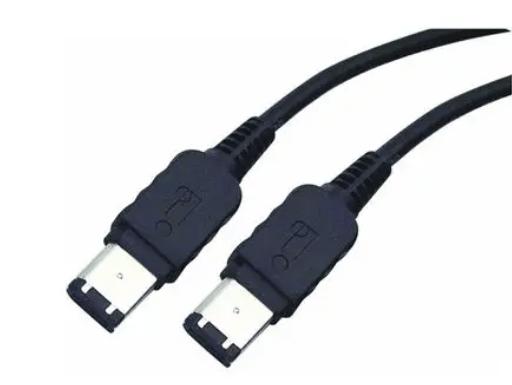
- Compact, rectangular plug with four pins (no ground pin), unlike the 6-pin Firewire connector that includes power lines.
- Commonly found on consumer electronics (e.g., Sony camcorders, portable audio devices) for its space-saving design.
- Lack of Power Supply:
- 4-pin iLink does not provide power to connected devices (6-pin includes 8-40V DC), requiring external power for bus-powered peripherals.
3. Data Transfer Speeds
- Standard Rates:
- Firewire 400 (IEEE 1394a): Transmits at 400 Mbps (50 MB/s), suitable for high-definition video (e.g., DV, HDV camcorders) and multi-channel audio.
- Firewire 800 (IEEE 1394b) is less common in 4-pin form but can reach 800 Mbps (100 MB/s) with compatible adapters.
- Protocol Features:
- Supports isochronous transfer (real-time data streaming) and asynchronous transfer (file transfers), ideal for video editing and live audio recording.
4. Applications in Consumer Electronics
- Digital Video Cameras:
- Sony’s Handycam series used 4-pin iLink to transfer DV footage to computers for editing, replacing older analog connections.
- Audio Equipment:
- Professional audio interfaces (e.g., Yamaha, RME) employed iLink for low-latency multi-track recording, supporting up to 64 channels.
- External Storage:
- Early Firewire hard drives used 4-pin connectors for faster transfers than USB 2.0 (480 Mbps vs. 400 Mbps, though Firewire had lower overhead).
5. Advantages Over USB 2.0 (in Contemporary Context)
- Real-Time Performance:
- Firewire’s isochronous mode ensures consistent data flow, critical for video/audio where latency causes glitches (USB 2.0 struggled with this).
- Device Chaining:
- Supports daisy-chaining up to 63 devices without a hub, while USB 2.0 required dedicated hubs for expandability.
- Hot-Plugging:
- Offered seamless plug-and-play without system reboots, ahead of early USB implementations.
6. Limitations and Decline
- Power Constraint:
- 4-pin’s lack of power delivery made it unsuitable for bus-powered devices unless paired with external adapters.
- Cost and Competition:
- Firewire chipsets were more expensive than USB, and USB 3.0’s arrival (5 Gbps) outpaced Firewire 800 in speed and cost.
- Industry Shift:
- Digital cameras and camcorders shifted to USB or HDMI for video transfer, while audio equipment adopted Thunderbolt or USB-C.
7. Modern Relevance
- Legacy Devices:
- Older Sony camcorders, audio interfaces, and Apple Macs (e.g., iMac G4) still use 4-pin iLink, requiring adapters (Firewire to USB-C/Thunderbolt) for modern systems.
- Niche Applications:
- Some vintage audio enthusiasts use iLink for connecting legacy digital mixers or synthesizers.
Summary
Firewire 4-pin iLink revolutionized consumer digital media in the 2000s by enabling fast, reliable video and audio transfer in compact devices. Though overshadowed by USB and Thunderbolt today, its legacy persists in specialized equipment, highlighting its role as a pivotal technology for real-time multimedia connectivity.





















Leave a comment