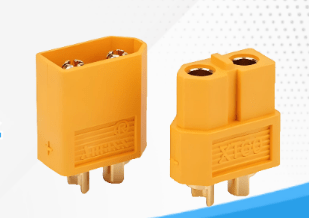
The XT connector is a high-current connector commonly used in radio-controlled (RC) models, drones, and micromobility devices. The following is a detailed introduction:
R&D Background
The XT connector was initially designed by Chinese manufacturer Amass to provide easy-to-use, compact, and durable connectivity for demanding portable electronics, featuring high current capacity and minimal resistance.
Model Specifications
XT connectors come in various variants to handle different currents, such as XT30 (30A), XT60 (60A), XT90 (90A), and XT150 (150A).
Appearance Design
- It has a compact rectangular shape with rounded edges and a unique polarized design to prevent incorrect mating.
- Typically composed of two separate housing parts for male and female connections, using a friction-fit design to maintain stable connections in vibrating environments.
Performance Features
- Internal contacts are usually gold-plated for excellent electrical conductivity and corrosion resistance, helping to reduce power loss and withstand high currents without overheating.
- Extremely low contact resistance (typically 0.5mΩ or lower) effectively minimizes power loss and heat generation in high-current applications.
Installation Method
XT connectors are typically cable-mounted and designed for soldering to ensure reliable current transmission, forming a stable connection between the connector and wires to handle high currents.
Application Fields
Currently widely used in drones, electric bicycles, power tools, and other devices, as well as in gardening, smart home appliances, and other industries—mainly for internal three-electric connections (battery, motor, electronic control) in equipment.
Originally designed for the RC vehicle market, it was later adopted by other remote-control applications.





















Leave a comment