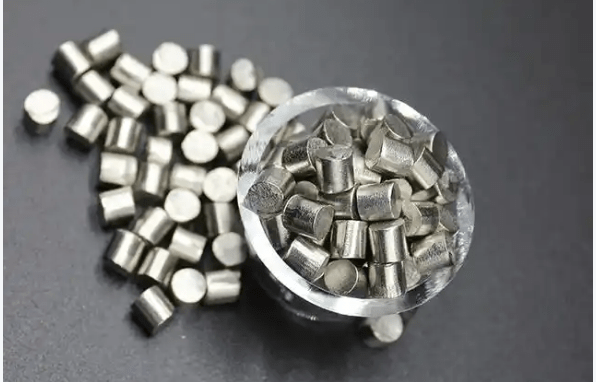
It is typically used to protect copper plating layers and provide additional mechanical properties and corrosion resistance.
Reasons for Selecting Nickel-Gold Plating in Welding Areas
In certain cases, nickel-gold plating is chosen for welding areas. This is primarily because the nickel plating layer provides a smooth, pore-free surface, facilitating heat conduction and metal flow during welding. Additionally, the nickel plating layer prevents thermal stress generated during welding from damaging the connector. The gold plating layer further improves the corrosion resistance and electrical conductivity of the welding area, ensuring the reliability and stability of the welded joint. Therefore, in connectors with high requirements for welding performance, nickel-gold plating is selected as the plating process for the welding area.
Characteristics of Nickel Plating
Nickel is a metal with excellent corrosion resistance and mechanical properties. Nickel plating layers provide a smooth surface, improving the connector’s pluggability and wear resistance. Additionally, nickel plating enhances the connector’s corrosion resistance, preventing external environmental factors from causing corrosion. Furthermore, nickel plating exhibits good adhesion and ductility, ensuring a tight bond between the plating layer and the substrate.
Applications of Nickel Plating
In connector plating, nickel plating is typically used as an intermediate layer to protect the copper plating layer and provide additional mechanical properties and corrosion resistance. Nickel plating significantly improves the connector’s insertion/removal performance and wear resistance, enabling the connector to maintain good performance even under frequent insertion/removal conditions. Additionally, the nickel plating layer enhances the connector’s corrosion resistance, extending its service life.





















Leave a comment