Core Differences Between Single-mode and Multimode Connectors
The selection between single-mode and multimode fiber optic connectors fundamentally depends on their structural, transmission, and application-specific characteristics:
1. Fiber Core Diameter and Light Propagation
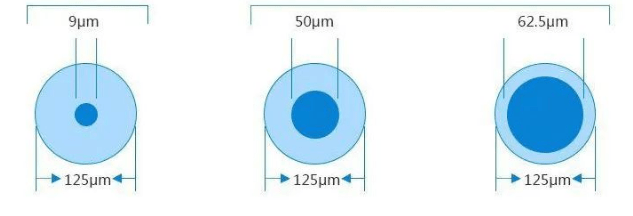
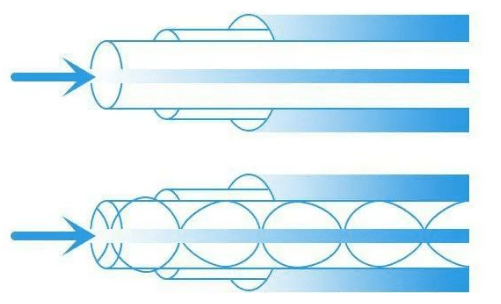
- Single-mode Fiber (SMF): Features a narrow core diameter (typically 8-10μm), allowing only one mode of light propagation. This minimizes dispersion, enabling ultra-long-distance transmission with minimal signal loss.
- Multimode Fiber (MMF): Has a wider core (50μm or 62.5μm), allowing multiple light modes to travel simultaneously. This causes modal dispersion (different modes arriving at different times), limiting transmission distance but simplifying installation.
2. Transmission Distance and Bandwidth
- Single-mode: Ideal for long-haul applications (10 km+), such as backbone networks, telecom infrastructure, or inter-city data centers. It supports high bandwidth (10 Gbps+) over vast distances without repeaters, thanks to its low dispersion and attenuation (typically <0.5 dB/km at 1310 nm).
- Multimode: Suited for short-range use (up to 500 m for 50μm MMF at 10 Gbps). It is cost-effective for campus networks, building interiors, or data centers where distances are limited. Newer OM4/OM5 MMF can extend bandwidth to 40/100 Gbps over shorter spans.
3. Light Source and Wavelength Compatibility
- Single-mode: Requires a laser light source (e.g., 1310 nm or 1550 nm), which emits a focused beam matching the narrow core. Lasers are more expensive but essential for minimizing dispersion in long-distance links.
- Multimode: Works with light-emitting diodes (LEDs) or vertical-cavity surface-emitting lasers (VCSELs) at shorter wavelengths (850 nm or 1300 nm). These sources are cheaper and better suited for the wider core, though they introduce more dispersion over distance.
4. Installation Difficulty and Cost
- Single-mode: Demands higher precision during termination due to its tiny core. Connector alignment (e.g., using APC or PC polish) is critical to avoid signal loss, making installation more complex and costly. SMF cables and connectors are also pricier than MMF.
- Multimode: Easier to install because the wider core tolerates minor alignment errors. It is more forgiving for DIY projects or environments requiring quick deployment, with lower costs for cables, connectors, and light sources.
5. Application Scenarios
- Choose Single-mode if:
- You need to transmit data over 1 km (e.g., between buildings or across cities).
- High bandwidth over long distances is essential (e.g., 100 Gbps for telecom backbones).
- The network requires low signal attenuation (e.g., undersea cables or satellite communications).
- Choose Multimode if:
- The link is within a building (<500 m), such as office LANs, data center racks, or campus networks.
- Cost-effectiveness is a priority, and shorter distances justify using cheaper LEDs/VCSELs.
- The application involves multi-gigabit speeds over short spans (e.g., 10 Gbps in data centers with OM4 fiber).
Key Considerations for Selection
- Distance Requirements: Map the physical span of your network first. Single-mode is non-negotiable for >1 km; multimode suffices for shorter links.
- Bandwidth and Future Scalability: Single-mode supports higher bandwidth over longer terms, ideal for future-proofing. Multimode may require upgrades (e.g., to OM5) for emerging 400 Gbps standards.
- Budget Constraints: Multimode offers lower upfront costs for cables, connectors, and transceivers, while single-mode incurs higher expenses but pays off in long-term reliability.
- Installation Expertise: Single-mode installations demand professional tools and training (e.g., fusion splicers), whereas multimode can be terminated with simpler kits.
Summary
Single-mode connectors excel in long-distance, high-bandwidth applications where precision and low loss are critical, while multimode connectors prioritize cost-efficiency and ease of installation for short-range networks. Align your choice with the network’s physical scope, bandwidth needs, and budget to optimize performance and investment.





















Leave a comment