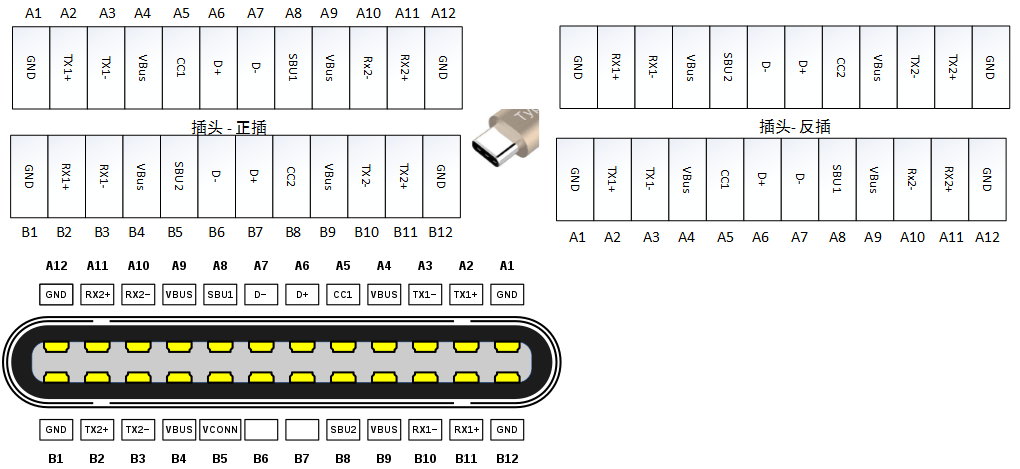
The USB-C interface, also known as Type-C, comes in two forms: the high-end socket used for ports and the plug used for cable ends. TYPE-C The USB Type-C socket contains 24 pins.
A full-function Type-C cable includes two Type-C connectors, with 22 wires inside the cable connecting the two ends. The missing two wires correspond to pins B6 and B7 on each socket, which are not connected by the cable.
The interface definition and physical appearance of the Type-C socket are as follows:

Type-C connectors are categorized into right-side-up sockets and reverse-insertion sockets. The cable connection configuration at each end differs depending on the insertion orientation.
- iPhone 15 Pro Review: Ultimate Features and Specs
- iPhone 15 Pro Max: Key Features and Specifications
- iPhone 16: Features, Specs, and Innovations
- iPhone 16 Plus: Key Features & Specs
- iPhone 16 Pro: Premium Features & Specs Explained
- iPhone 16 Pro Max: Features & Innovations Explained
- iPhone 17 Pro: Features and Innovations Explained
- iPhone 17 Review: Features, Specs, and Innovations
- iPhone Air Concept: Mid-Range Power & Portability
- iPhone 13 Pro Max Review: Features, Specs & Performance
- iPhone SE Review: Budget Performance Unpacked
- iPhone 14 Review: Key Features and Upgrades
- Apple iPhone 14 Plus: The Ultimate Mid-range 5G Smartphone
- iPhone 14 Pro: Key Features and Innovations Explained
- Why the iPhone 14 Pro Max Redefines Smartphone Technology
- iPhone 15 Review: Key Features and Specs
- iPhone 15 Plus: Key Features and Specs Explained
- iPhone 12 Mini Review: Compact Powerhouse Unleashed
- iPhone 12: Key Features and Specs Unveiled
- iPhone 12 Pro: Premium Features and 5G Connectivity
- Why the iPhone 12 Pro Max is a Top Choice in 2023
- iPhone 13 Mini: Compact Powerhouse in Your Hand
- iPhone 13: Key Features and Specs Overview
- iPhone 13 Pro Review: Features and Specifications





















 Ruigu Electronic
Leave a comment