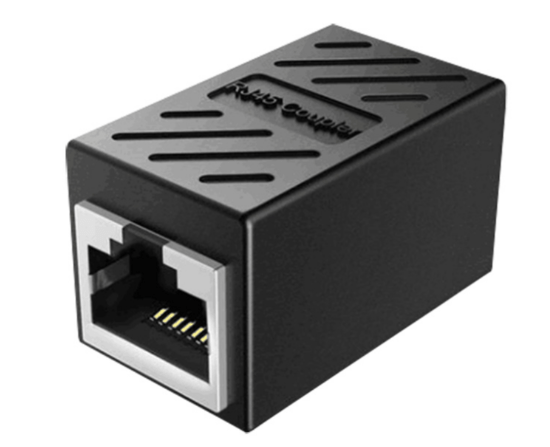
1. Definition and Physical Structure
The 8P8C (8 Position 8 Contact) connector, commonly known as RJ-45, is the standard interface for Ethernet networking. It features an 8-pin modular plug/socket, resembling a larger version of the RJ-11 telephone connector, and is used to terminate twisted-pair cables (e.g., Cat5e, Cat6) for wired network connections.
2. Pin Configuration and Wiring Standards
- T568A and T568B Standards:
- Both define pin assignments for transmitting data, with the main difference in the order of green and orange wire pairs:
- T568A: White-green, Green, White-orange, Blue, White-blue, Orange, White-brown, Brown
- T568B (more common): White-orange, Orange, White-green, Blue, White-blue, Green, White-brown, Brown
- Straight-through Cable: Uses the same wiring standard on both ends (e.g., T568B to T568B), ideal for connecting devices of different types (e.g., computer to router).
- Cross-over Cable: Swaps transmit and receive pairs (e.g., T568A on one end, T568B on the other), used for connecting devices of the same type (e.g., computer to computer).
- Both define pin assignments for transmitting data, with the main difference in the order of green and orange wire pairs:
- Pin Functions (T568B, 10/100/1000BASE-T):
- Pin 1: Transmit Data + (TD+)
- Pin 2: Transmit Data – (TD-)
- Pin 3: Receive Data + (RD+)
- Pin 4: Not used (in 10/100BASE-T)
- Pin 5: Not used (in 10/100BASE-T)
- Pin 6: Receive Data – (RD-)
- Pin 7-8: Not used (in 10/100BASE-T, used for power in PoE)
3. Compatibility with Ethernet Speeds
- 10BASE-T (10 Mbps): Uses pins 1-2 (transmit) and 3-6 (receive).
- 100BASE-TX (100 Mbps): Same pin usage as 10BASE-T, requiring Cat5 or higher cable.
- 1000BASE-T (Gigabit Ethernet): Utilizes all 4 wire pairs (pins 1-8), requiring Cat5e/Cat6 cable for full performance.
- 10GBASE-T (10 Gigabit Ethernet): Demands Cat6a/Cat7 cable to minimize signal loss across all pairs.
4. Power over Ethernet (PoE) Support
- PoE (802.3af): Delivers 15.4W via pins 4-5 and 7-8, compatible with 10/100BASE-T.
- PoE+ (802.3at): Supplies 30W, using the same pins for power while data uses pins 1-2/3-6.
- PoE++ (802.3bt): Supports up to 90W, leveraging all 8 pins for both data and power in Gigabit/Ethernet.
5. Common Applications
- Home/Office Networking: Connects computers, routers, switches, and printers to local area networks (LANs).
- IP Cameras and VoIP Phones: Uses PoE to combine data transmission with power supply, reducing cable clutter.
- Industrial and Commercial Setups: Deployed in data centers, surveillance systems, and building automation for reliable wired connectivity.
6. Advantages of 8P8C (RJ-45)
- Standardization: Universally adopted, ensuring compatibility across devices from different manufacturers.
- Bandwidth Scalability: Supports from 10 Mbps to 10 Gbps, adaptable to evolving network needs.
- PoE Integration: Enables power delivery to devices without separate power adapters, ideal for remote or hard-to-reach equipment.
- Durability: Modular design allows easy replacement of connectors without rewiring entire systems.
7. Limitations and Considerations
- Cable Length: Maximum recommended length is 100 meters (328 feet) for reliable data transmission; longer distances require repeaters or fiber optic cables.
- EMI Susceptibility: Unshielded twisted pair (UTP) cables are vulnerable to electromagnetic interference in harsh environments, necessitating shielded (STP) or fiber solutions.
- Installation Complexity: Proper crimping of RJ-45 connectors requires tools and adherence to wiring standards to avoid signal loss.
8. Modern Alternatives and Evolution
- RJ-45 Remains Dominant: Despite the rise of wireless technologies (Wi-Fi 6/6E), RJ-45 remains the backbone for high-speed, low-latency wired networks in data centers and professional settings.
- Future-Proofing: Cat8 cables (supporting 40 Gbps at 30 meters) and 25GBASE-T/50GBASE-T standards extend RJ-45’s relevance for next-generation networking.
Summary
The 8P8C (RJ-45) connector is the cornerstone of modern Ethernet networking, enabling reliable data transmission across diverse environments. Its standardized design, compatibility with multiple speeds, and PoE integration have solidified its role in both consumer and enterprise networks, ensuring continued relevance as bandwidth demands grow.





















 Ruigu Electronic
Leave a comment